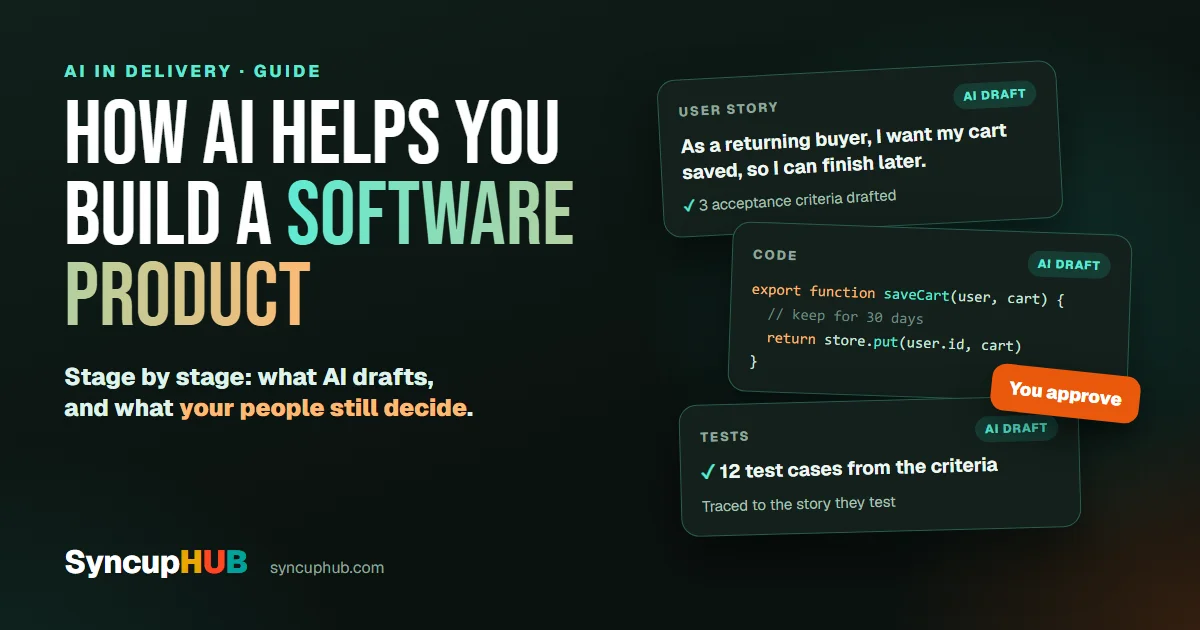
How AI helps you build a software product, stage by stage
Where AI genuinely helps in software product development, from discovery and requirements to code, tests and release, and what your people should still own.

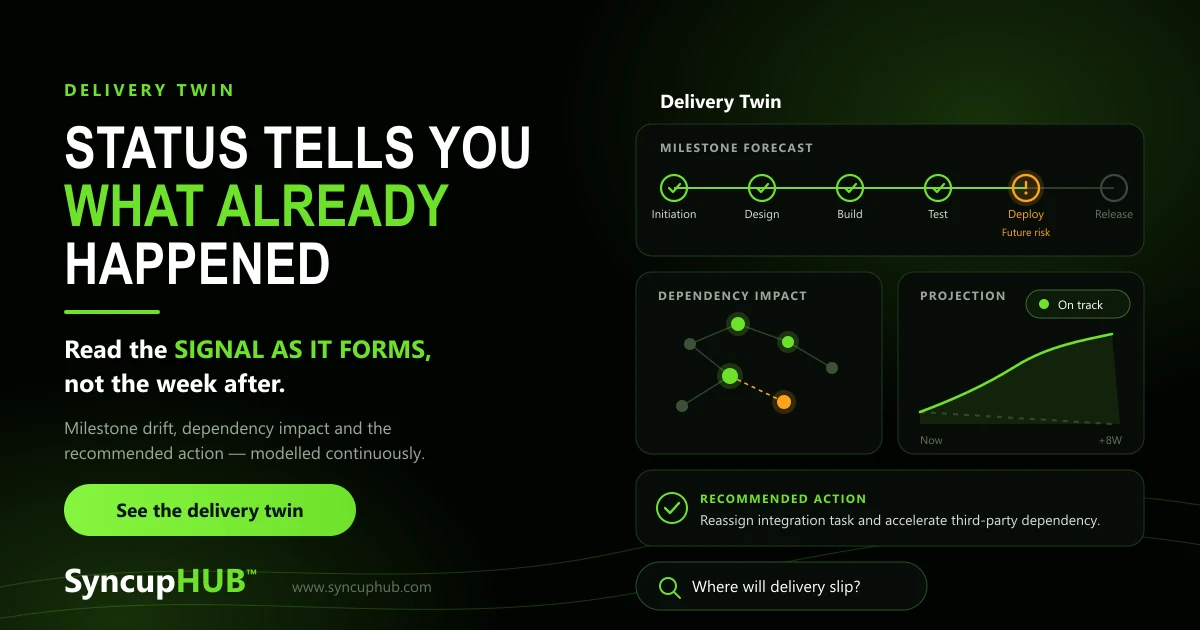
How delivery signal forms, why status reporting arrives too late to act on, and what changes when every role has an agent of its own.
17 posts
Where AI genuinely helps in software product development, from discovery and requirements to code, tests and release, and what your people should still own.
The AI tools that genuinely save hours, from meeting notes to code, task by task, and a simple test for spotting the ones that only add work.
A breach in the news? Check in five minutes whether your email or passwords were exposed, then lock things down in the next hour. Free tools, plain steps.
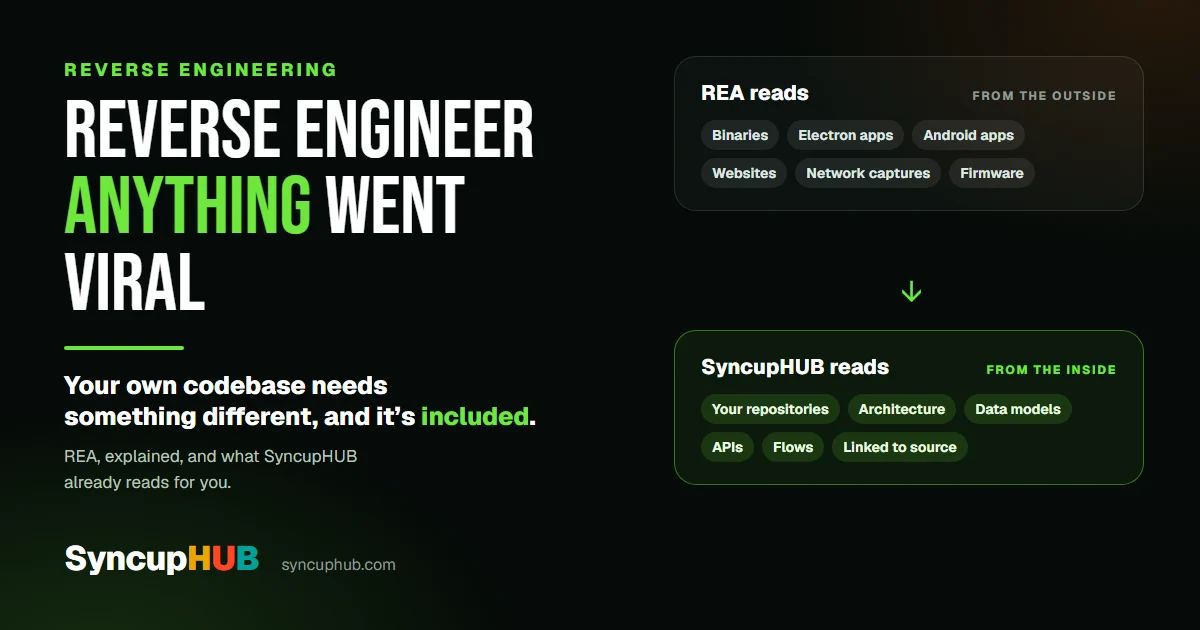
REA, the viral MCP server, lets AI agents reverse engineer apps and binaries. For your own code, SyncupHUB already includes evidence-linked reverse engineering.
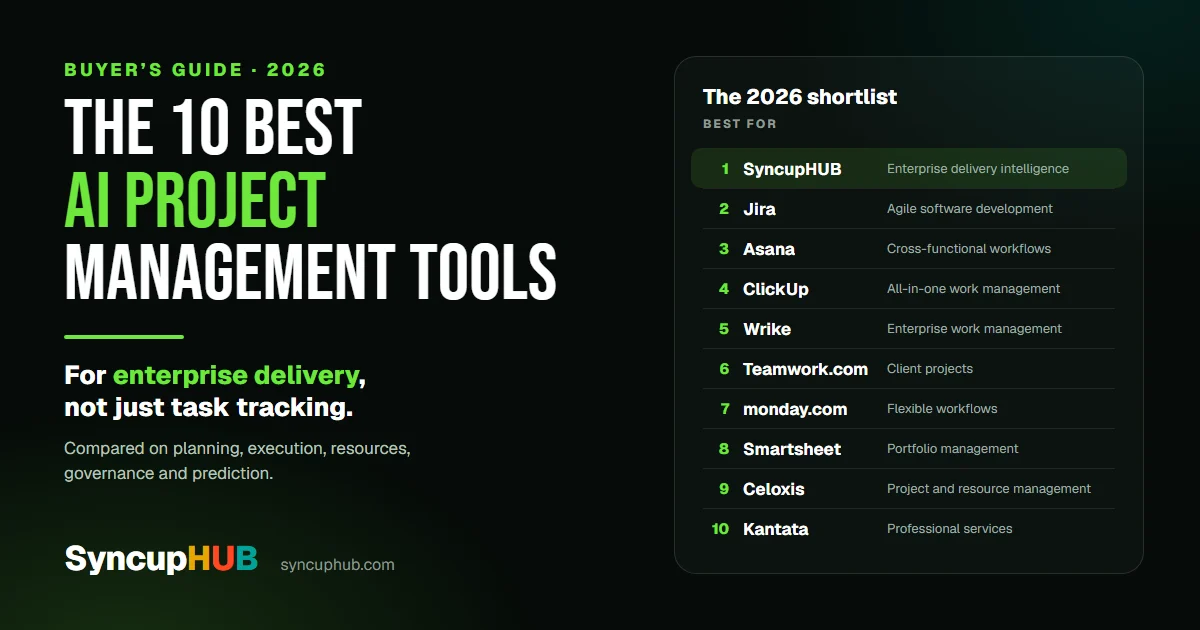
Compare the 10 best AI project management tools for enterprise delivery in 2026, including SyncupHUB, Jira, Asana, ClickUp, Wrike and Smartsheet.
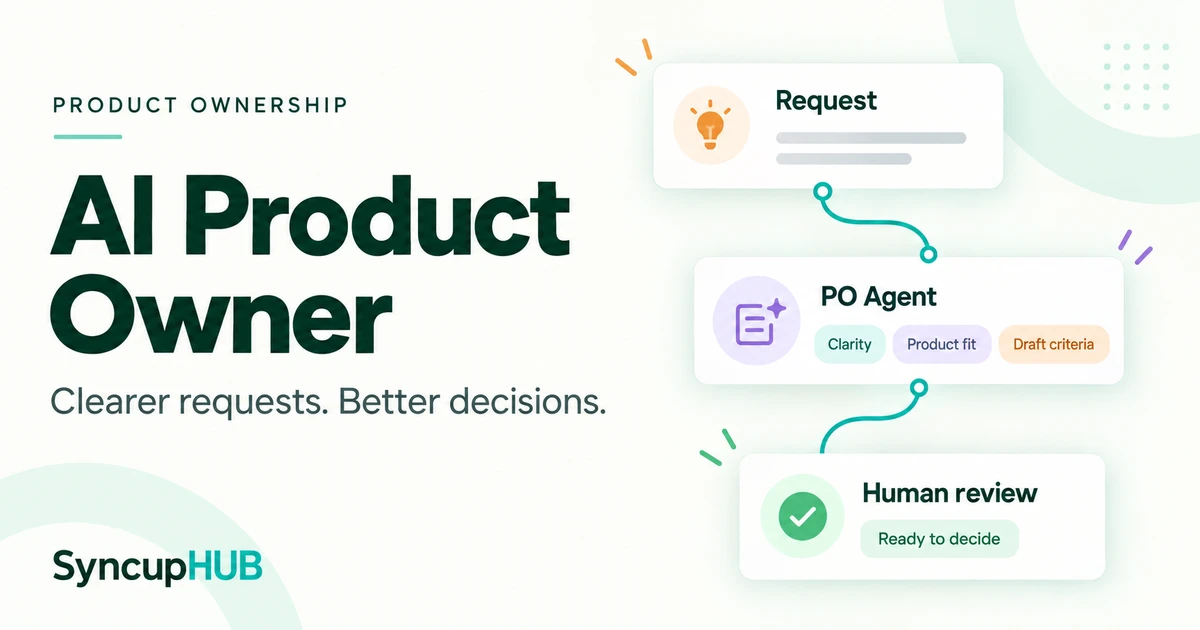
How SyncupHUB’s PO Agent checks request clarity, reviews product fit and drafts acceptance criteria, while product owners still own priority and approval.
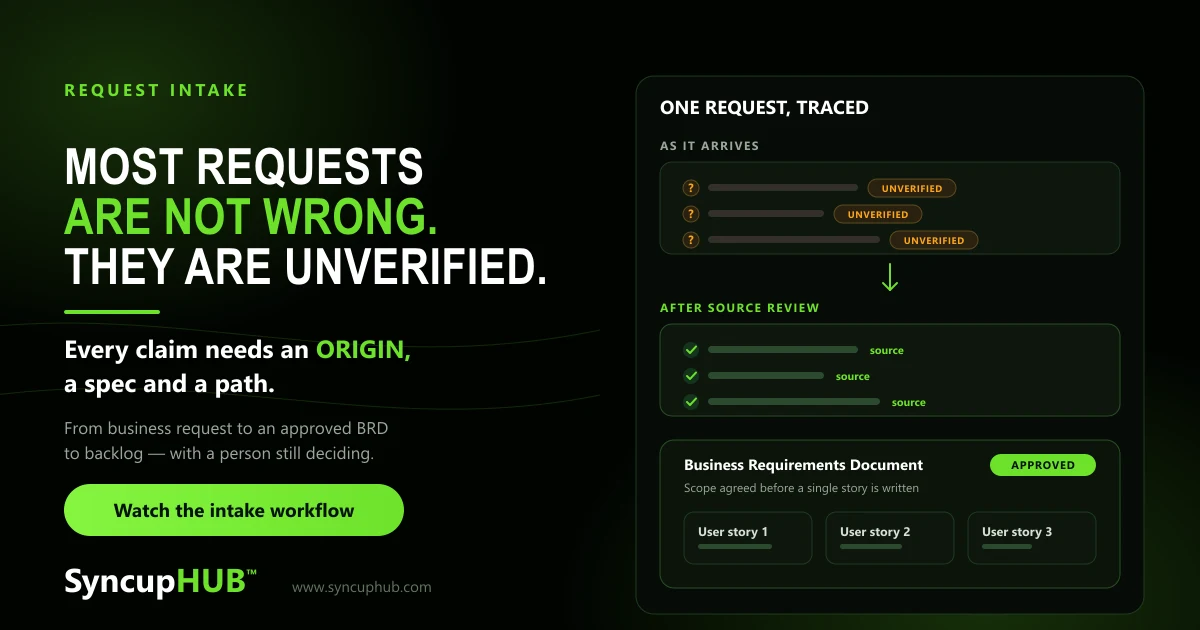
A request becomes work the moment somebody can trace every claim in it back to a source. Origin, spec and path — drafted by an agent, decided by a person.
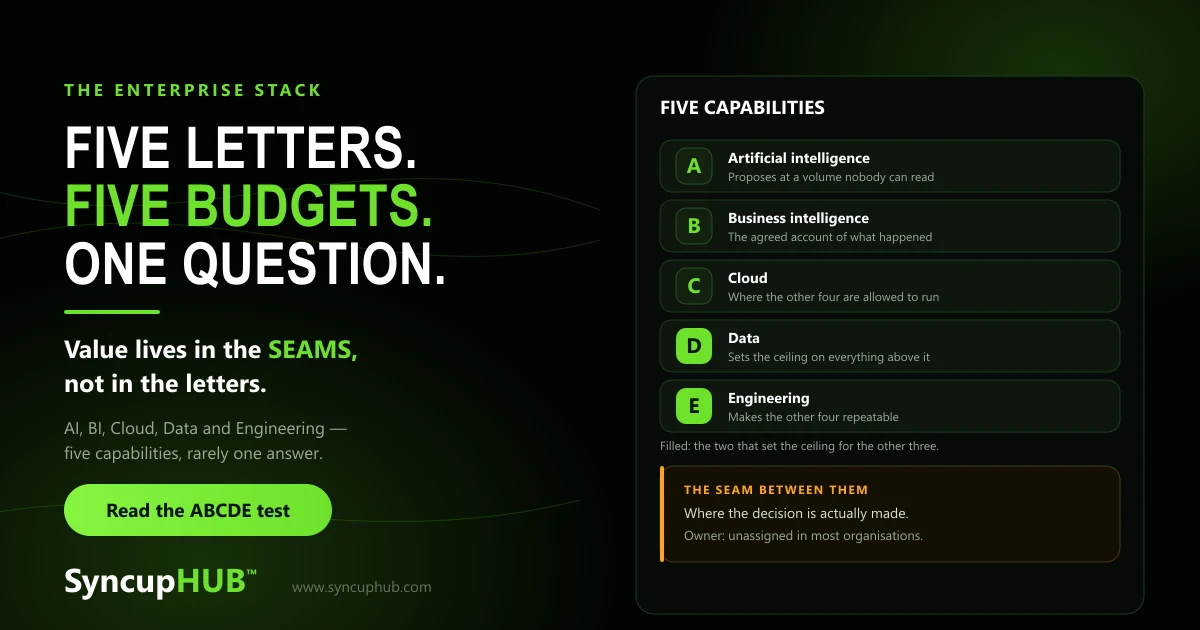
AI, BI, Cloud, Data and Engineering are five budget lines in most enterprises and one capability in almost none. The value is not in owning the letters — it is in the order you built them and the seams where they meet.
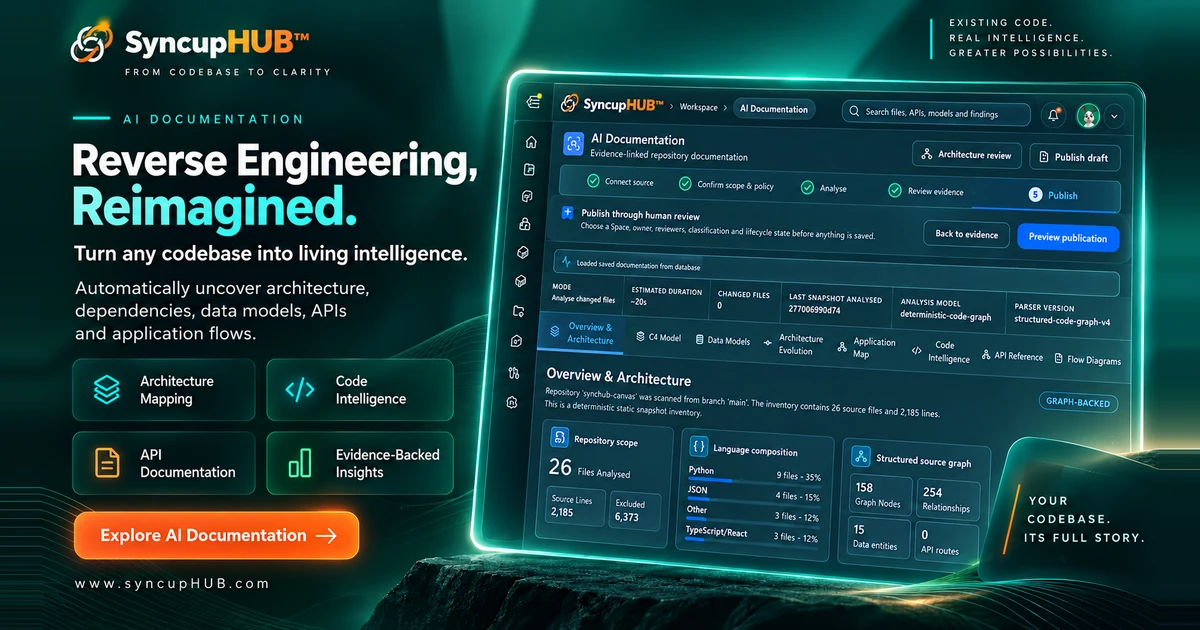
Documentation is a snapshot of what somebody believed. The repository is a record of what was actually done. Reverse engineering turns existing code into architecture, data models, APIs and flows — with every claim traced back to a line.
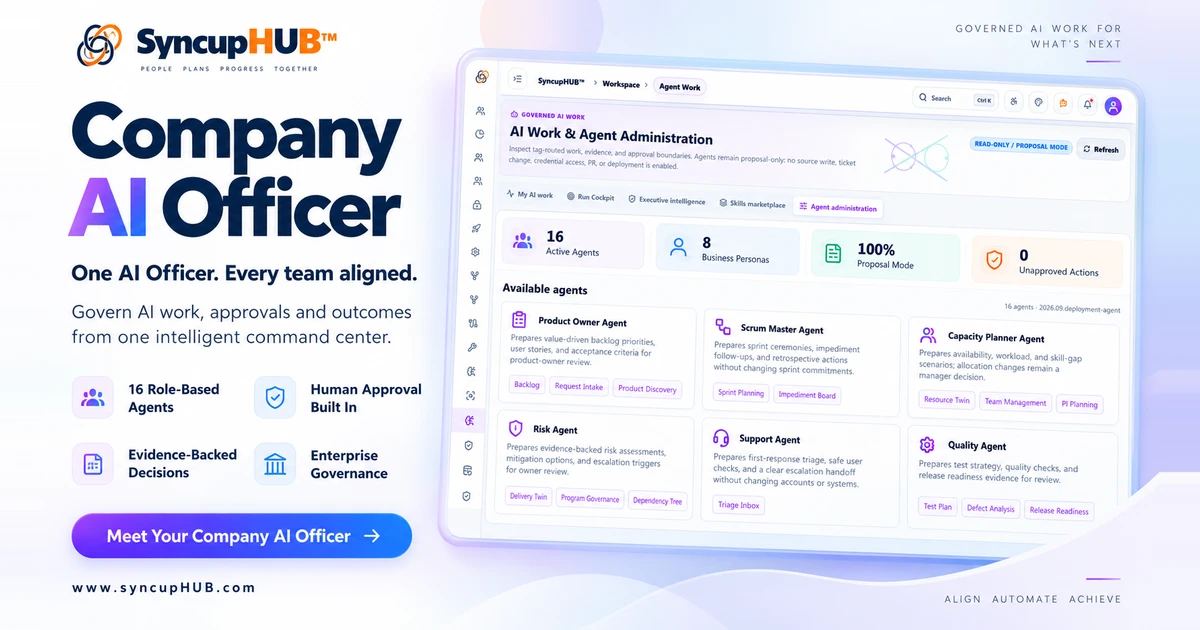
Most AI pilots fail an audit before they fail a business case. Governed AI work means agents that prepare and humans that commit — seventeen role-based agents, proposal-only by design, with every decision reconstructable.
A 96% pass rate is not release confidence. Confidence comes from connecting defects, coverage, automation and production signal — and from every role reading the same evidence differently.
Most workshops end with a wall of sticky notes and no owner. Canvas keeps the thinking attached to the work, and maps dependencies while you brainstorm so blockers surface before they occur.
Artificial intelligence is changing workplace productivity not year by year, but day by day. The real opportunity is not replacing employees — it is removing inefficient work.
Status reporting describes a sprint that has already finished. By the time a red flag reaches a steering committee, the decision that could have changed the outcome was available weeks earlier.
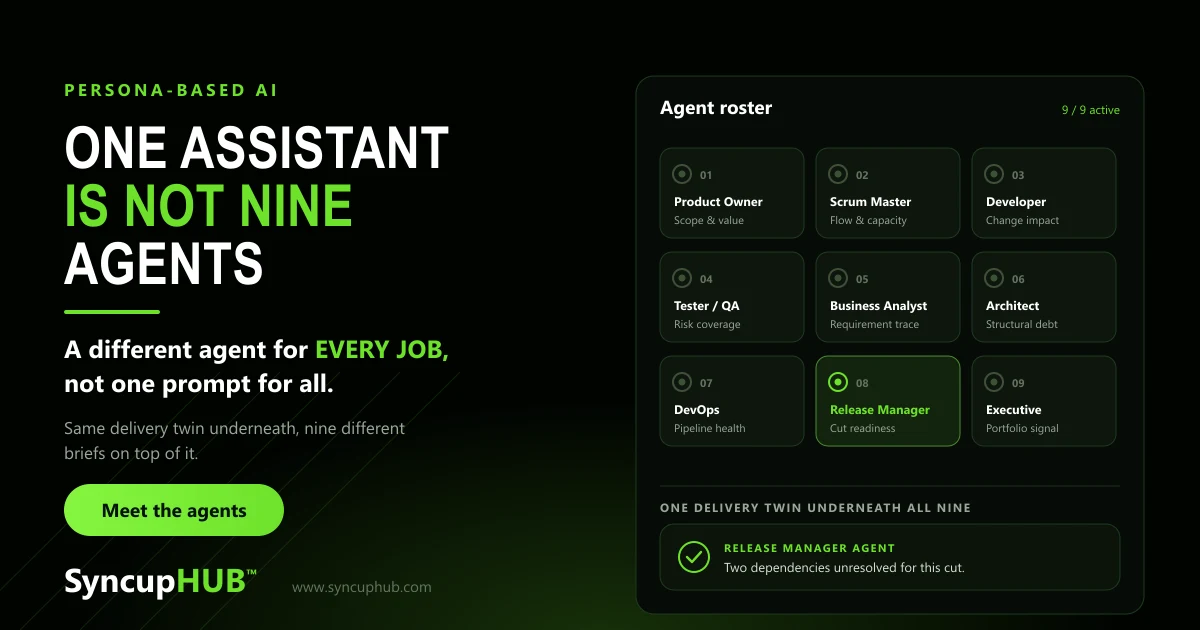
Most delivery tools added a single chatbot and pointed it at the whole product. That helps nobody in particular, because a developer, a scrum master and an executive are not asking the same question.
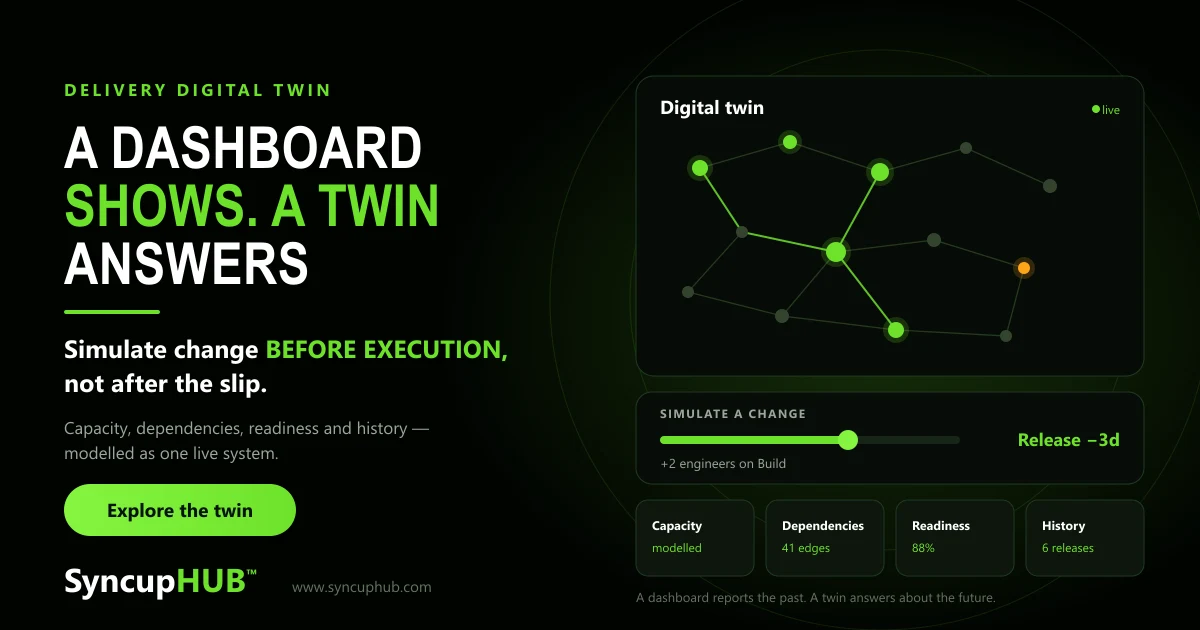
The term arrived from manufacturing and got attached to dashboards. A twin is not a view of your delivery. It is a model you can ask questions of before you commit.
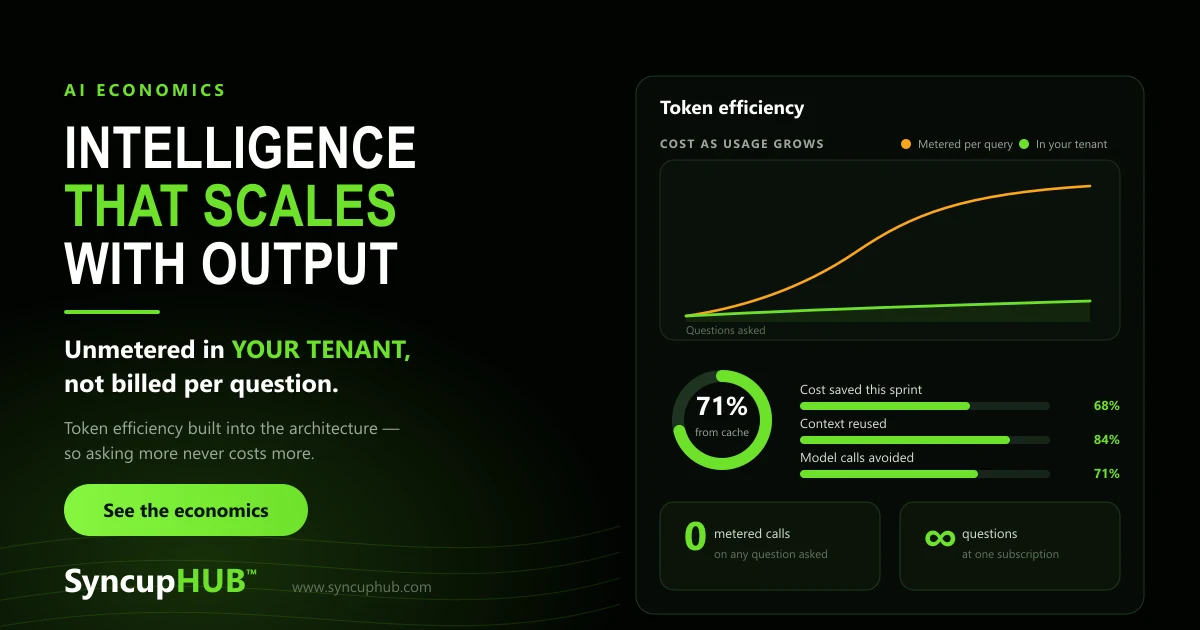
Per-seat add-ons and per-query metering are not just pricing choices. They decide how much your teams are willing to use the thing you bought.
Every idea here is something SyncupHUB does in your own tenant. Get access and try it against your delivery.