Your delivery status is always three weeks late
Status reporting describes a sprint that has already finished. By the time a red flag reaches a steering committee, the decision that could have changed the outcome was available weeks earlier.
Short answer
Why is delivery status reporting always late?
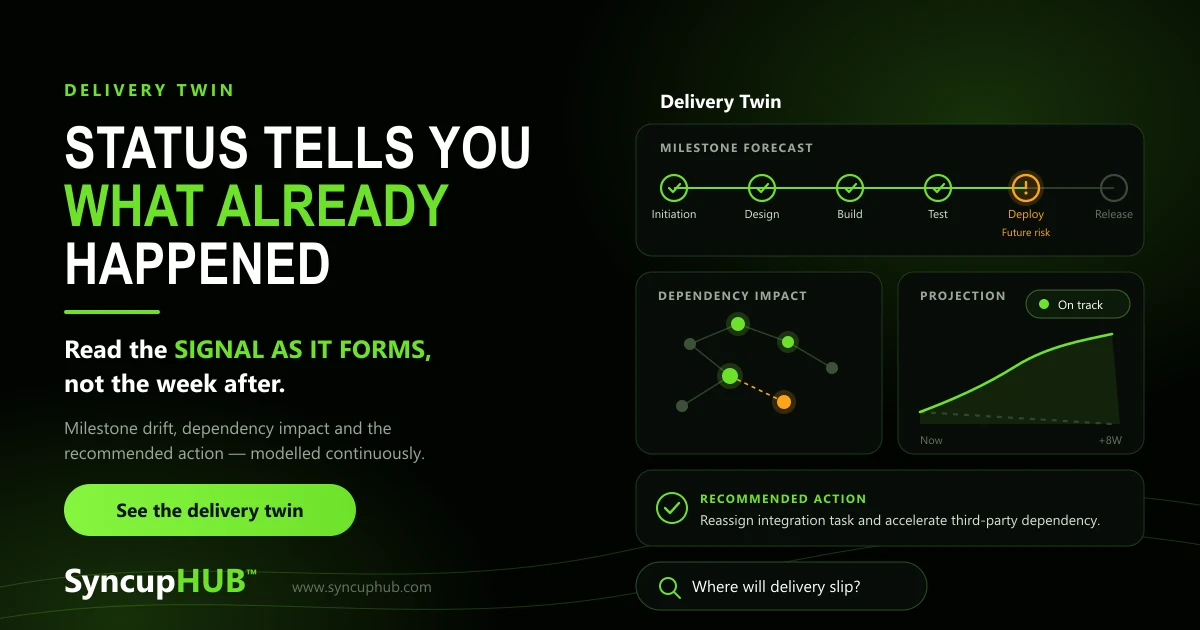
Because a status report is assembled after the work happens, at the pace of the meeting calendar. The signal exists earlier, in the work itself: carryover creeping up, a dependency that has not moved, review queues lengthening. A delivery model that reads those signals can say what is about to happen.
Reporting is a lagging indicator by construction
A status report is assembled after the work happens. Someone collects updates, reconciles them against a plan, and presents a summary at a cadence that suits the meeting calendar rather than the delivery. By the time an epic turns red in a deck, the team has usually known for a fortnight, and the decision that would have changed the outcome expired somewhere in between.
This is not a discipline problem. It is structural. The reporting layer sits downstream of the work, so it can only ever describe the past. Adding more reporting makes the description richer without making it earlier.
The signal exists before the status does
Everything needed to see a slip coming is already in the workspace well before it shows up in a report: carryover creeping up across consecutive sprints, a dependency that has not moved in eleven days, review queues lengthening while throughput holds steady, capacity quietly rebalanced onto unplanned work.
Each of those is individually unremarkable. Together they are the shape of a date that is about to move. The problem is that nothing is reading them as a set while they form.
What changes when the system reads the signal
A delivery model that watches those signals continuously can say something a report cannot: not what happened, but what is about to. That the payments epic will miss by four days at current velocity. That QA, not engineering, becomes the constraint in two sprints. That the largest risk to the release is a vendor API nobody has escalated yet.
The useful version of this is not a prediction with a confidence score attached. It is a prediction with its reasoning attached, so the people who own the outcome can disagree with it. A forecast that cannot be challenged gets ignored the first time it is wrong.
The test for whether it is working
The measure is not how good the dashboards look. It is whether the conversation in the steering meeting changed. If leaders are still being told what happened, nothing has moved. If they are being asked to decide something while the decision still has leverage, the reporting layer has been replaced by something better.
Features in this article
SyncupHUB runs this inside your own tenant — a delivery model that reads the signal as it forms, with an agent for every role.
Keep reading
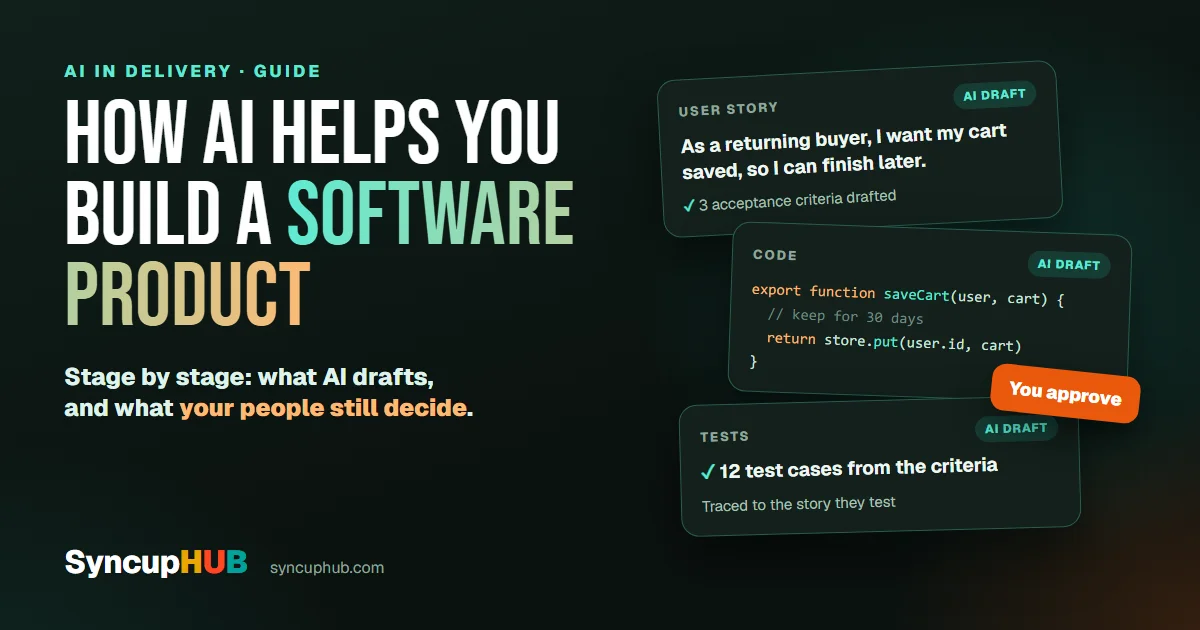
How AI helps you build a software product, stage by stage
Where AI genuinely helps in software product development, from discovery and requirements to code, tests and release, and what your people should still own.
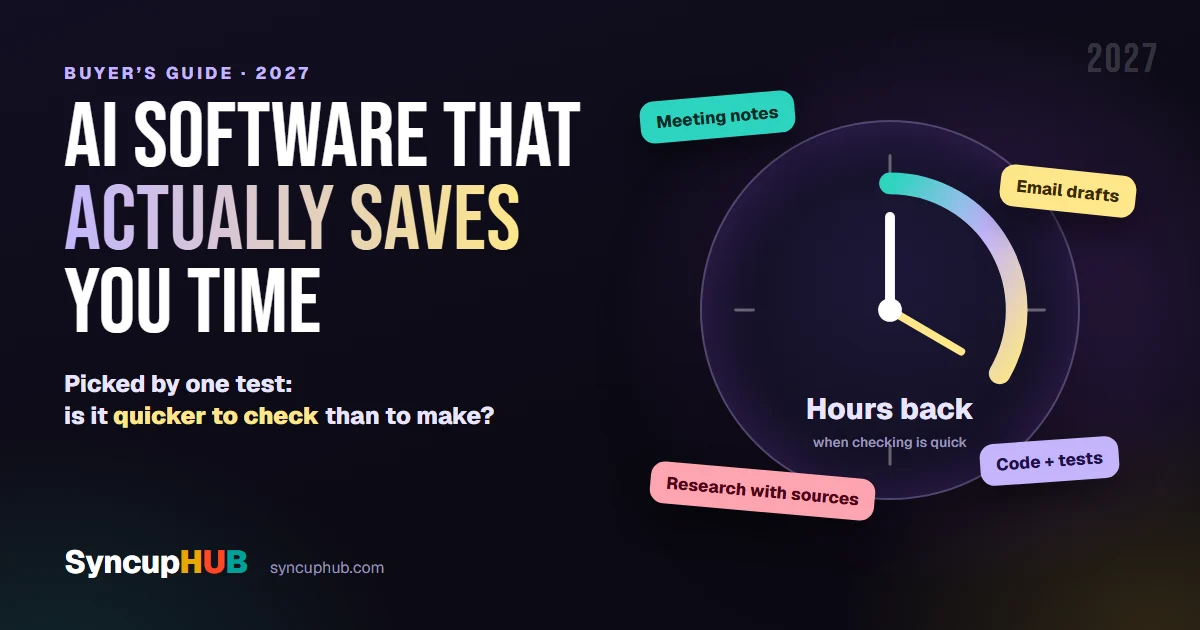
AI software that actually saves you time in 2027
The AI tools that genuinely save hours, from meeting notes to code, task by task, and a simple test for spotting the ones that only add work.