AI at Work: Yesterday’s Assistant, Today’s Teammate, Tomorrow’s Operating System
Artificial intelligence is changing workplace productivity not year by year, but day by day. The real opportunity is not replacing employees — it is removing inefficient work.
Short answer
How is AI at work changing, from assistant to operating system?
AI began as a personal assistant that drafts and summarises. It is becoming a teammate that runs connected, multi-step workflows, and it is heading towards a persona-based layer that understands each role’s responsibilities, permissions and decision boundaries. The opportunity is removing inefficient work, not replacing people.
Artificial intelligence is changing workplace productivity—not year by year, but day by day.
In 2025, organizations expected AI to help employees work faster. Today, companies are redesigning workflows around it. Tomorrow, AI will become an intelligent layer connecting people, knowledge, processes and decisions.
But the real opportunity is not replacing employees. It is removing inefficient work so people can focus on thinking, creating, collaborating and leading.
What we expected last year
AI was primarily viewed as a personal productivity assistant that could:
- Draft emails and documents
- Summarize meetings
- Create presentations
- Generate and review code
- Automate repetitive tasks
The assumption was simple: give every employee an AI assistant and productivity will automatically increase.
AI saved time, but organizations discovered that individual productivity does not always create organizational productivity.
A developer may generate code faster, but unclear requirements still create rework. A manager may prepare a report instantly, but decisions can still remain delayed.
The real bottleneck is often not the task—it is the workflow surrounding it.
What is happening today
AI is moving from isolated assistance to connected, multi-step workflows.
Employees are using it to analyse information, identify risks, prepare decisions and coordinate work. AI is gradually becoming a teammate rather than just a tool.
The productivity question is therefore changing from:
How quickly can someone complete a task?
to:
How effectively can humans and AI achieve an entire business outcome together?
What tomorrow will look like
Tomorrow’s workplace AI will be persona-based.
A developer, tester, product owner, people leader and executive should not receive the same AI experience. AI must understand each person’s role, responsibilities, permissions, workflows and decision boundaries.
It will proactively identify risks, dependencies, quality issues and workload imbalances. It may perform approved, low-risk corrections automatically, while important decisions remain under human control.
Employees will increasingly guide, review and manage AI agents—using them to expand their capabilities rather than compete with them.
Productivity without job loss
Productivity must not become employee surveillance or hidden performance scoring.
It should be measured through positive outcomes:
- Time returned to employees
- Reduction in repetitive work
- Better quality and fewer errors
- Faster, informed decisions
- Improved collaboration
- New skills developed
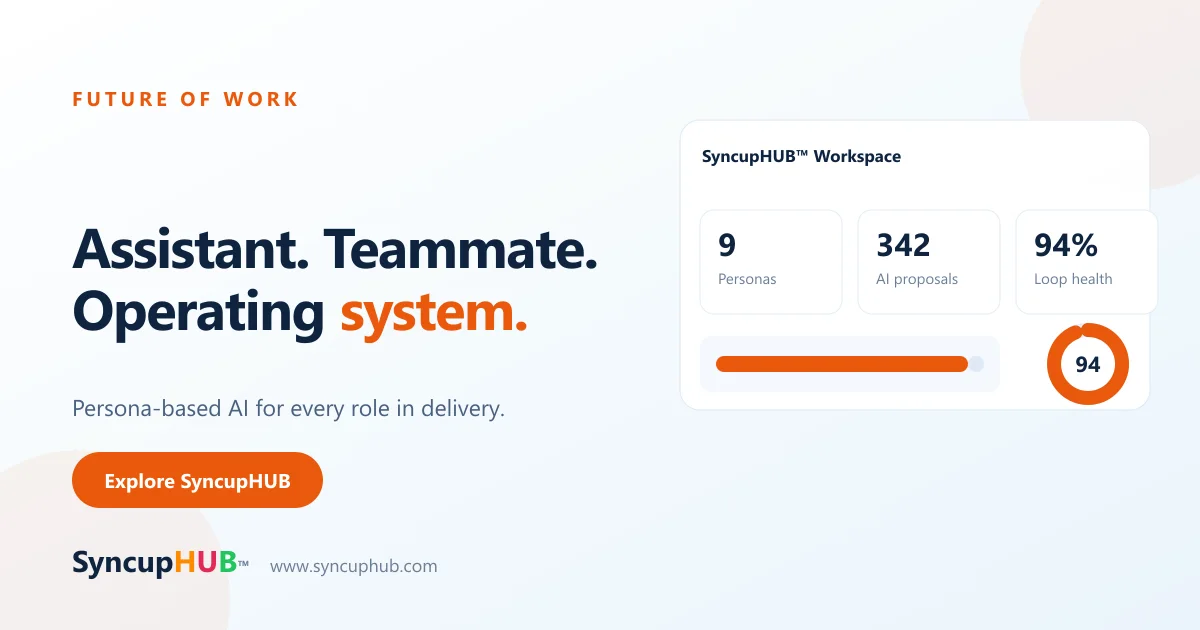
This is also the vision behind SyncupHUB™: a persona-based human–AI workspace connecting intelligence with roles, workflows, governance and measurable outcomes.
The future of work is not AI versus employees.
It is employees empowered by AI versus outdated and inefficient ways of working.
Features in this article
SyncupHUB runs this inside your own tenant — a delivery model that reads the signal as it forms, with an agent for every role.
Keep reading
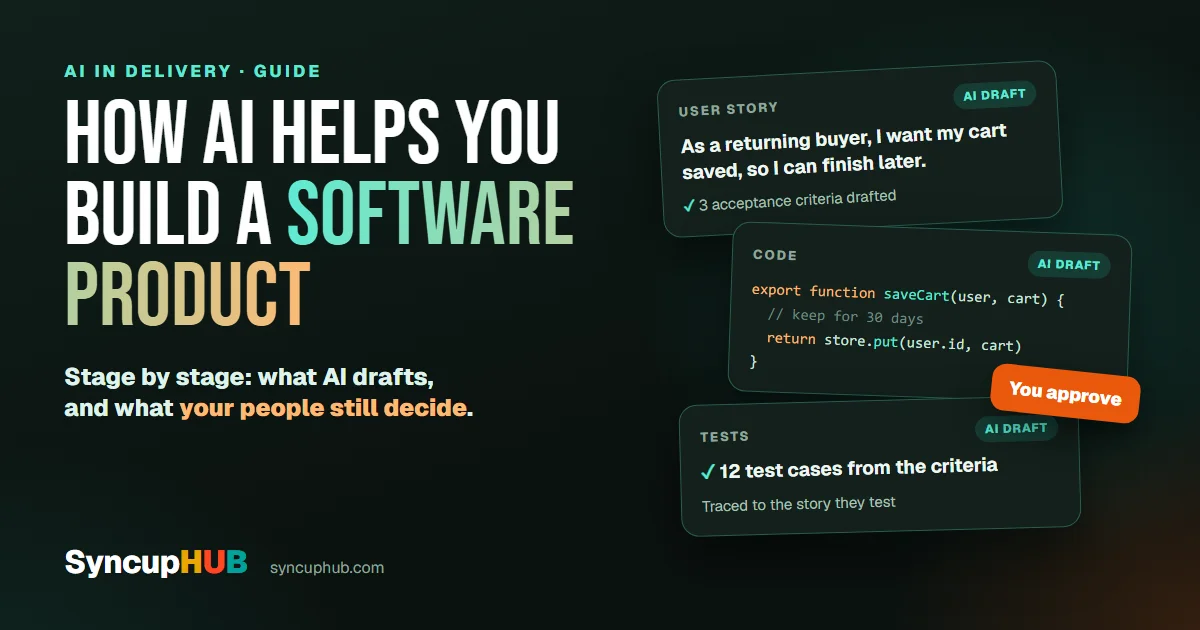
How AI helps you build a software product, stage by stage
Where AI genuinely helps in software product development, from discovery and requirements to code, tests and release, and what your people should still own.
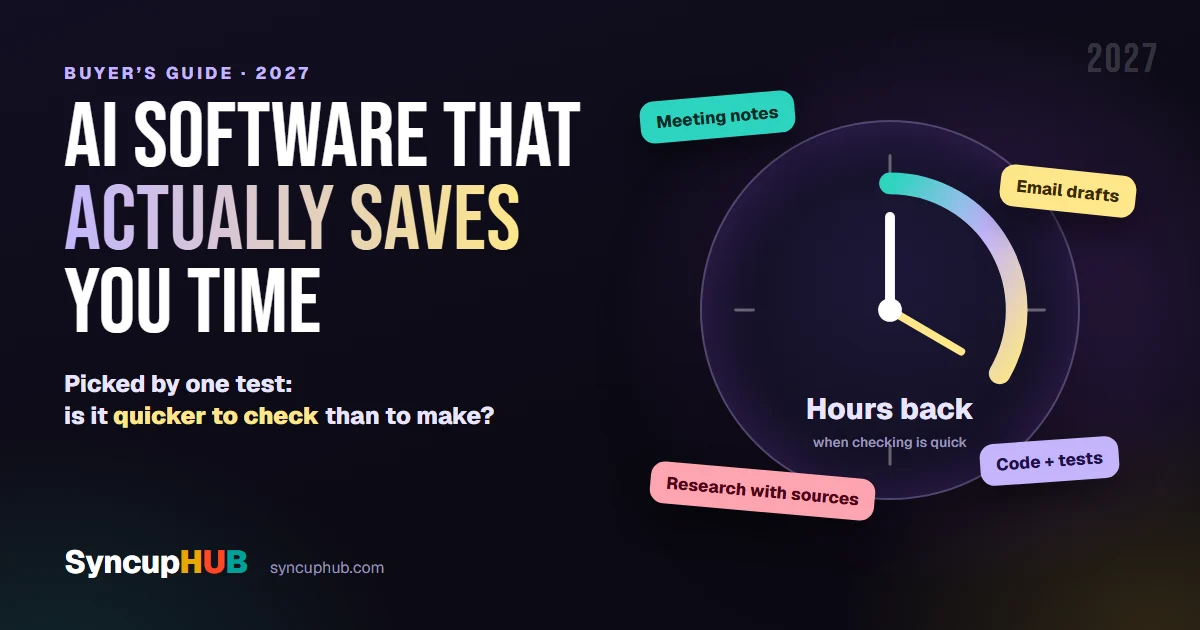
AI software that actually saves you time in 2027
The AI tools that genuinely save hours, from meeting notes to code, task by task, and a simple test for spotting the ones that only add work.