The real cost of AI in delivery tooling
Per-seat add-ons and per-query metering are not just pricing choices. They decide how much your teams are willing to use the thing you bought.
Short answer
What does AI really cost in delivery tools?
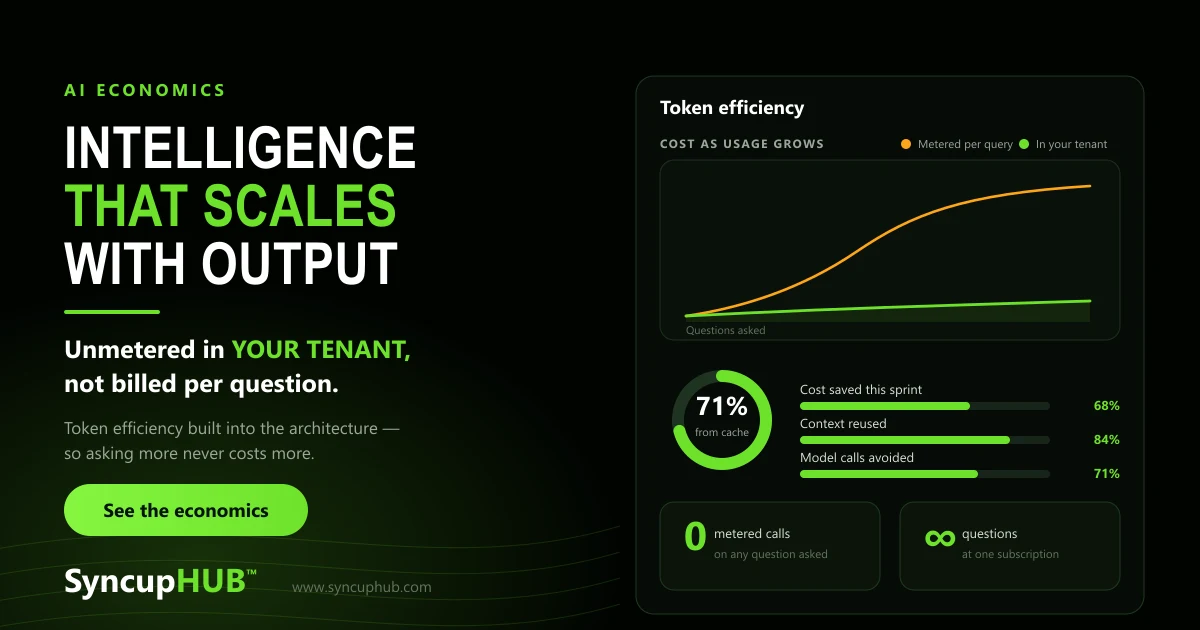
The larger cost is behavioural. When every question has a price, people ask fewer, and the AI never becomes the default way of working. Most delivery AI work is routine and suits small models and cached context, so ask a vendor what happens to the cost when usage doubles.
Metering changes behaviour before it changes budget
When a question has a price, people ask fewer questions. Not consciously, and not because anyone was told to ration — simply because the friction is there. The result is that the AI gets used for the obviously worthwhile cases and never becomes the default way work gets done.
That matters more than the invoice, because the value of a feedback loop compounds with use. A model that sees a fraction of the work learns a fraction as much about how this organisation actually delivers.
Where the cost actually goes
Most delivery AI work is routine: scoring readiness, drafting a description, checking a commitment against velocity, summarising what moved. Routine work does not need the largest available model, and much of it does not need a fresh call at all when the context has not changed.
Right-sizing the model to the task and serving repeat context from cache moves the majority of the volume off the expensive path. The visible effect is a spend curve that falls while usage rises, which is the opposite of what most teams expect when they turn AI on.
The question to ask a vendor
Not what the AI costs, but what happens to the cost as usage doubles. If the answer scales linearly with questions asked, the tool will be adopted narrowly no matter how good it is. If intelligence is unmetered inside your own tenant, adoption is limited by usefulness rather than by budget — which is the only limit worth having.
Features in this article
SyncupHUB runs this inside your own tenant — a delivery model that reads the signal as it forms, with an agent for every role.
Keep reading
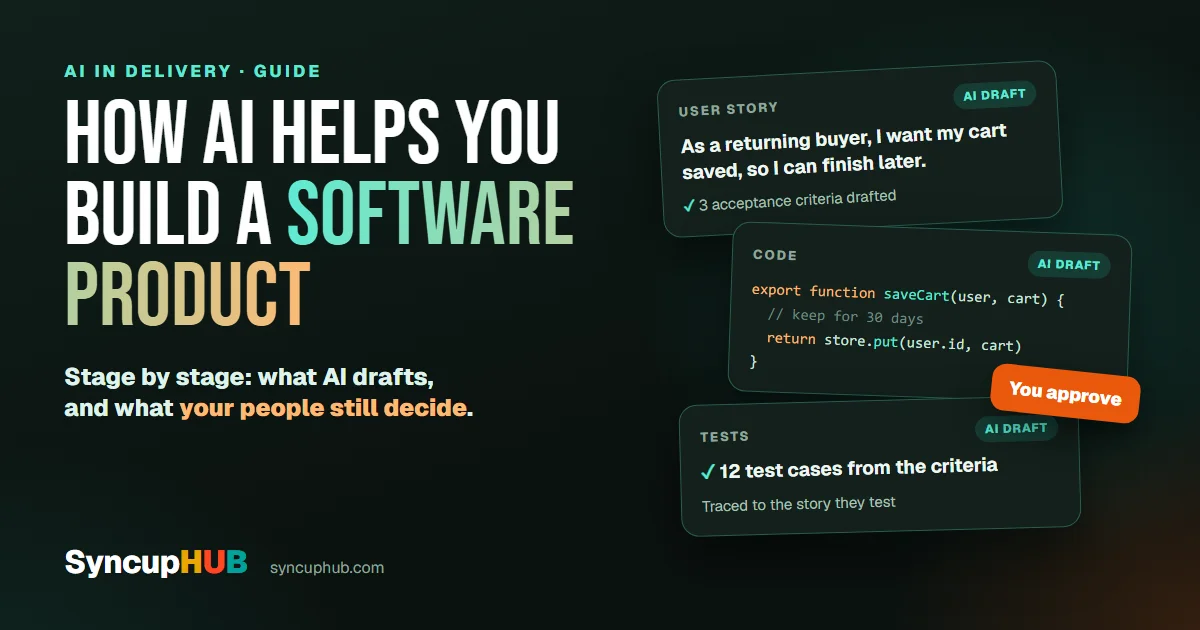
How AI helps you build a software product, stage by stage
Where AI genuinely helps in software product development, from discovery and requirements to code, tests and release, and what your people should still own.
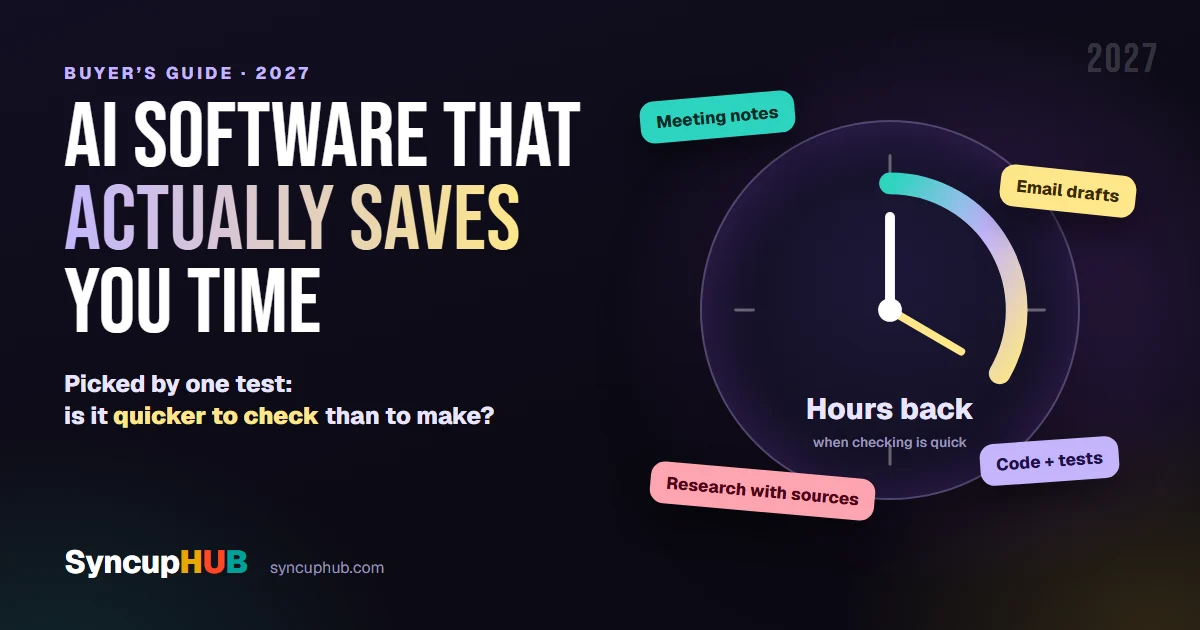
AI software that actually saves you time in 2027
The AI tools that genuinely save hours, from meeting notes to code, task by task, and a simple test for spotting the ones that only add work.